

What Is Pulp Capping? How Is a Pulp Capping Filling Performed?
Tooth pain sometimes creeps in quietly, and sometimes it turns your whole life upside down overnight. Especially if the decay has progressed and come very close to the nerve, that familiar fear begins: “Will I need a root canal?” A throbbing pain that wakes you up at night, a tooth that stings with hot or cold, and that unsettling uncertainty inside… Most of us have experienced this at least once. As we sit in the dental chair, the first question that usually crosses our minds is: “Am I going to lose my tooth?”
However, not every deep cavity or severe toothache automatically means a root canal treatment. In dentistry, there are more conservative methods aimed at preserving the vitality of the tooth. This is where a valuable yet less commonly known treatment comes into play: pulp capping.
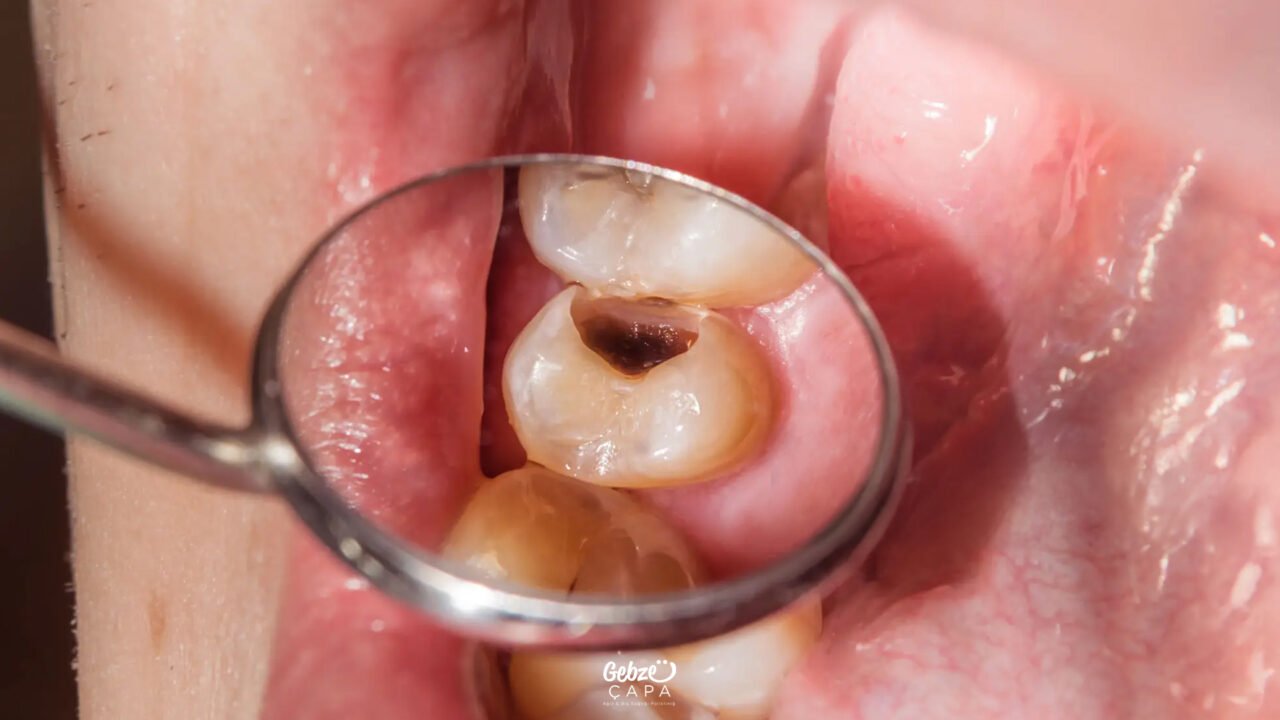
Pulp capping is a procedure performed when the decay has reached very close to the tooth’s nerve but has not completely damaged it. The goal is to save the tooth by protecting the living tissue inside and keeping it healthy in the mouth for as long as possible. In fact, it is an important step taken before saying, “Root canal is the only option.”
When patients hear during an examination, “We’re very close to the nerve, but it’s still alive,” they often feel both fear and hope at the same time. Pulp capping steps in at exactly that hopeful moment. When performed in the right case and with the right technique, it can help preserve the tooth’s natural tissue and allow it to function healthily for many years.
What Is Pulp Capping?
Pulp capping is a special treatment applied to protect the most precious part of the tooth the living tissue commonly referred to as the “nerve.” This living tissue inside the tooth is called the pulp, and it is essentially the heart of the tooth. During the removal of deep decay, the dentist may get very close to this tissue, and sometimes there may even be a tiny exposure. At that exact moment, the aim is not to immediately proceed to a root canal, but to try to keep the tooth alive.
Pulp capping involves placing a protective and healing-supportive material over the living tissue inside the tooth. This material acts like a “protective shield.” It gives the tooth a chance to recover on its own. In other words, we rely on the body’s natural healing ability.
Of course, a more technical definition is possible… But if we explain it in simple terms, it is this:
Pulp capping means, “This tooth is still alive let’s not give up on it just yet.”
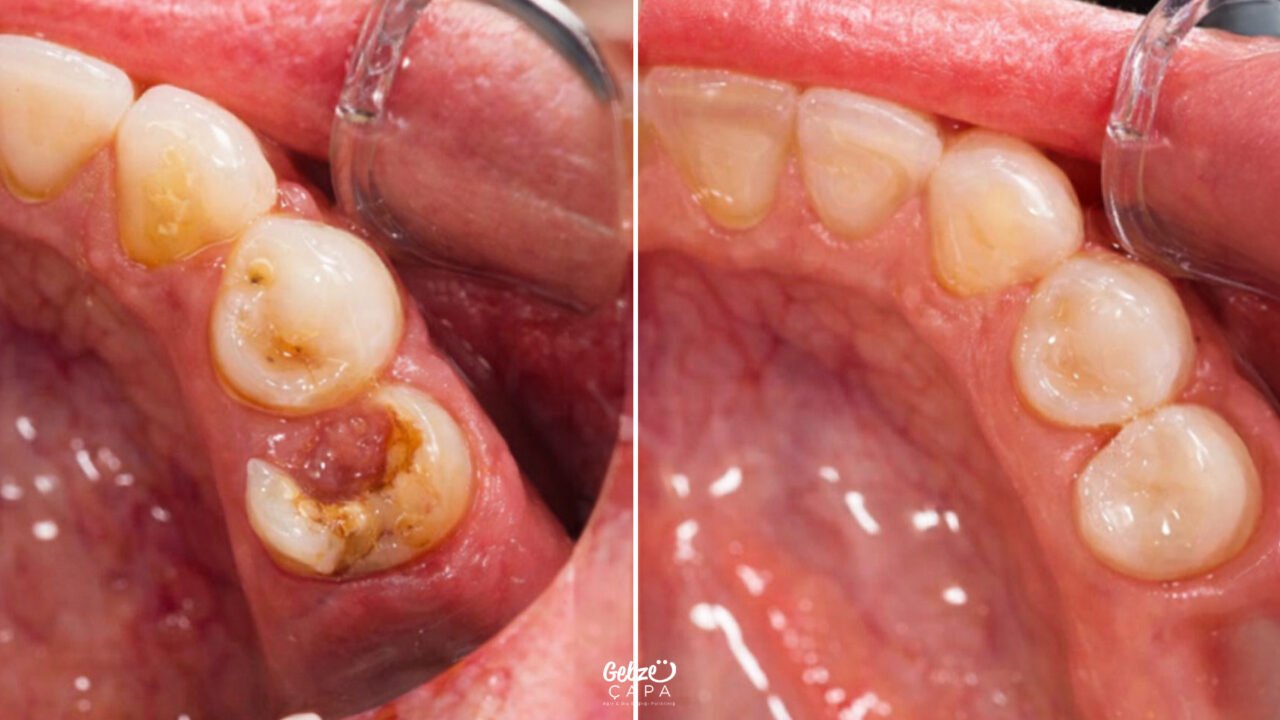
Sometimes when patients sit in the chair, you can see that anxiety in their eyes: “Will it be a root canal?” But not every deep cavity or near nerve situation requires one. If the pulp is still healthy and the conditions are suitable, pulp capping can help the tooth remain vital for many years.
When Is Pulp Capping Performed?
First of all, let’s be honest: pulp capping is not performed in every deep cavity. It’s not as simple as saying, “The decay is close to the nerve let’s do pulp capping.” Certain important conditions must be met for this treatment to succeed. Our goal is truly to save the tooth, not to give false hope.
There should not be severe, throbbing pain especially pain that wakes you up at night. If the pain has become intense and uncontrollable, this usually indicates that the nerve has been irreversibly affected. In such cases, pulp capping unfortunately may not be sufficient.
Another important factor is that the pulp the living tissue inside the tooth must still be alive. We are giving the tooth “a chance,” but there must be enough vitality to justify that chance. If the pulp has largely lost its vitality, the success rate of pulp capping decreases.
Additionally, there should not be an advanced infection. If a significant infection has started at the root of the tooth or if a clear sign of infection is visible on the X-ray, a different treatment approach is required. Likewise, any bleeding that occurs during the procedure must be controllable. Uncontrolled, excessive bleeding may indicate that the pulp is not healthy.
What Are the Types of Pulp Capping?
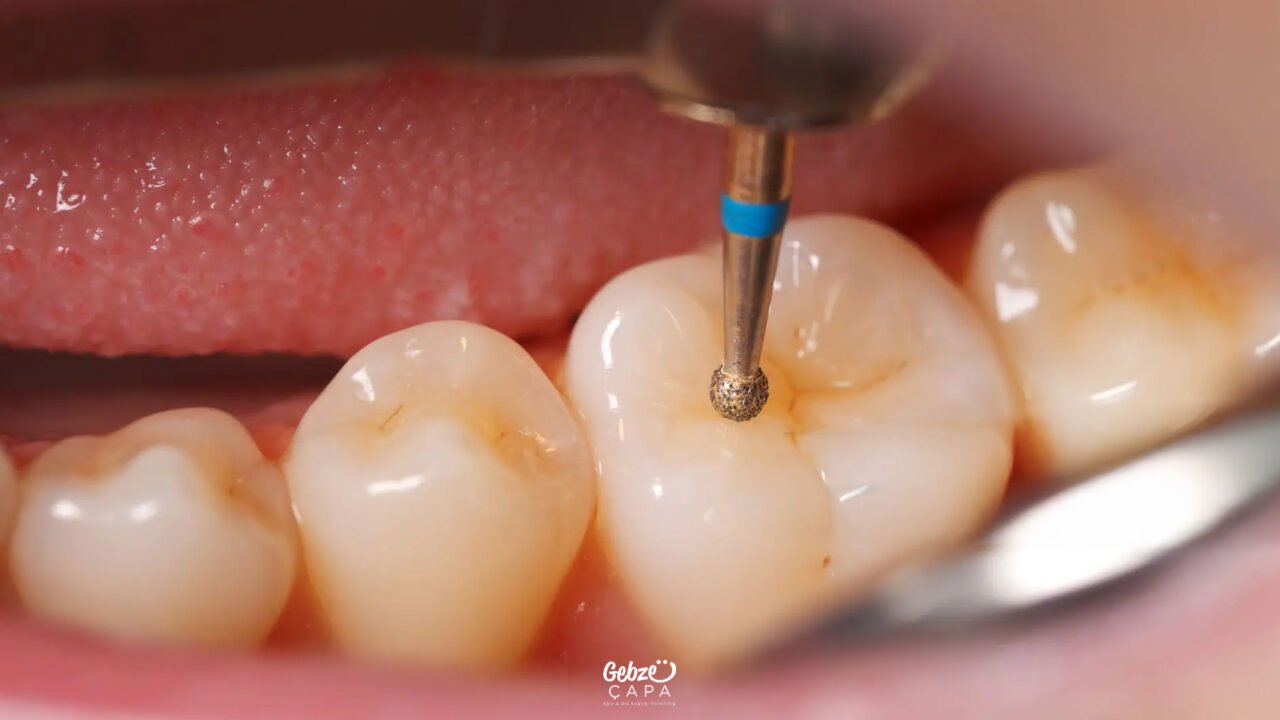
Pulp capping is not a single, uniform procedure. It is performed in two different ways depending on the condition of the tooth. The determining factor is whether the pulp (the living tissue) has been exposed or not. During the examination and decay removal, the dentist chooses the most appropriate method based on the situation at that moment.
Direct Pulp Capping
Sometimes, despite careful work, the pulp may be exposed at a very small point while removing decay. This exposure can be as tiny as the tip of a needle. If the pulp appears healthy and the bleeding can be controlled, a special protective material is placed directly over the exposed area. This is called direct pulp capping.
The purpose here is very clear:
To protect the living tissue of the tooth and give it a chance to heal itself.
Indirect Pulp Capping
Indirect pulp capping is a more conservative approach and is more commonly used in daily practice. In this case, the decay has progressed very close to the pulp but has not yet exposed it. Instead of aggressively removing all the decay and risking pulp exposure, the dentist intentionally leaves a very thin layer of affected dentin.
A protective material is then placed over this area, and the tooth is securely sealed.
The reasoning behind this approach is simple:
“Let’s move forward in a controlled and safe way without harming the nerve.”
Since the risk of pulp exposure is lower in indirect pulp capping, the success rate is generally higher. For this reason, it is often the first choice in many cases.
How Is a Pulp Capping Filling Performed?
The pulp capping process begins with a careful examination. Your dentist thoroughly evaluates the tooth and uses an X-ray to determine how deep the decay has progressed. For pulp capping to be successful, it must be applied to the right tooth at the right time. If the pulp is still vital and the conditions are suitable, the procedure begins.
Local anesthesia is usually administered to ensure your comfort during the procedure. Contrary to what many patients fear, severe pain is not expected. The decayed tissue is then carefully removed. If the decay is extremely close to the nerve, a very thin layer at the deepest part may be intentionally left behind. This is not incomplete cleaning it is a controlled approach aimed at protecting the tooth.
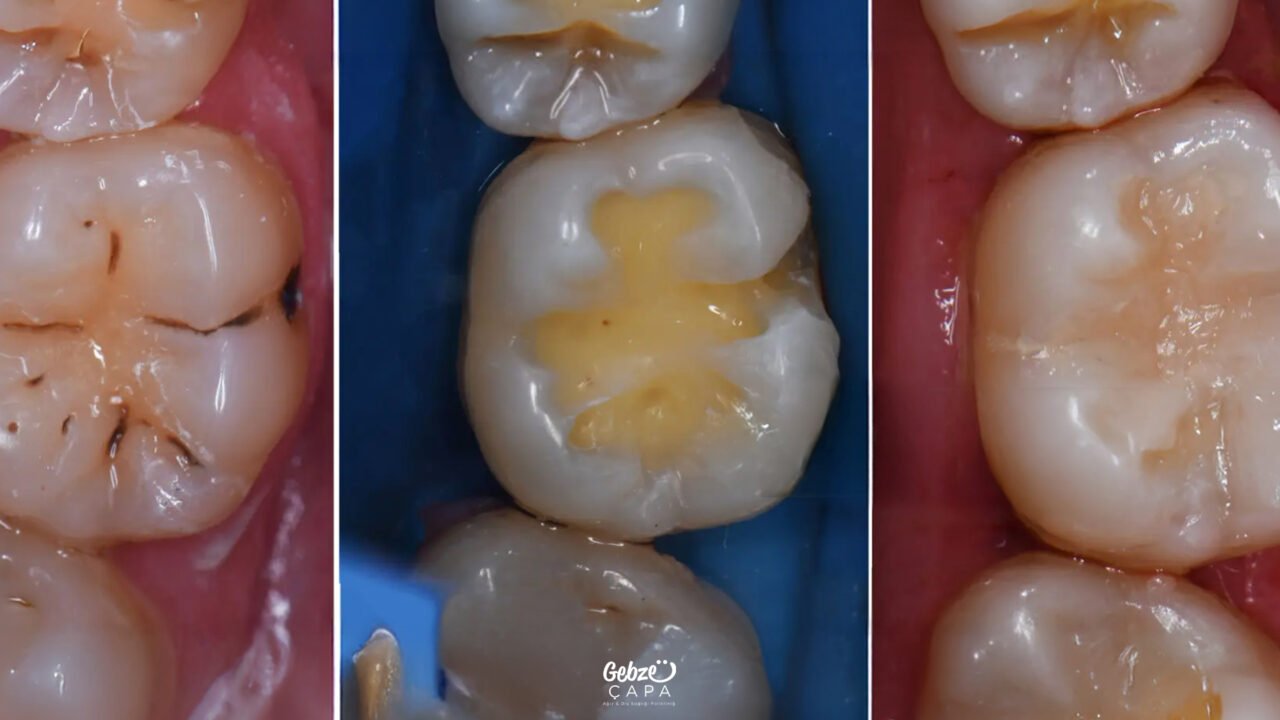
After cleaning, a special biocompatible protective material is placed over the pulp. This material supports the tooth’s natural healing process and helps form a protective barrier over time. In other words, the tooth is given a genuine opportunity to heal.
Finally, the tooth is sealed with either a temporary or permanent filling. In some cases, a follow-up appointment is scheduled a few weeks later. If the healing process progresses smoothly, the tooth continues to function healthily while maintaining its vitality.
Is There Pain After the Procedure?
This is a question almost every patient asks: “Will I have pain after the procedure?”
Let me say this sincerely: mild sensitivity during the first few days is completely normal. You may feel a brief sting when drinking something hot or cold. There may also be slight tenderness when chewing. After all, a healing process has been initiated inside that tooth, and your body is actively working there.
What truly matters is that this sensitivity gradually decreases over time. The overall picture should improve day by day. If, on the contrary, the pain becomes stronger, starts waking you up at night, or the tooth begins to ache on its own, then the situation may be different. These symptoms may indicate that the pulp has not healed as expected.
In such cases, the next step is usually a root canal treatment. This does not mean that pulp capping was performed incorrectly; sometimes, despite our best efforts, the tooth does not respond to healing. What matters most is monitoring the process carefully and intervening appropriately when necessary.